

1. Points-based Loyalty Program
Points programs are a great way to acquire customers and increase engagement.
When done right, they’re about engagement and providing value to your members.
If you regularly iterate a points program, it will remain fresh and top of mind for your members.
Best for:
New businesses and simple purchases. Points systems work well for most business types, as long as your customers purchase from you frequently.
Example of points-based loyalty programs:
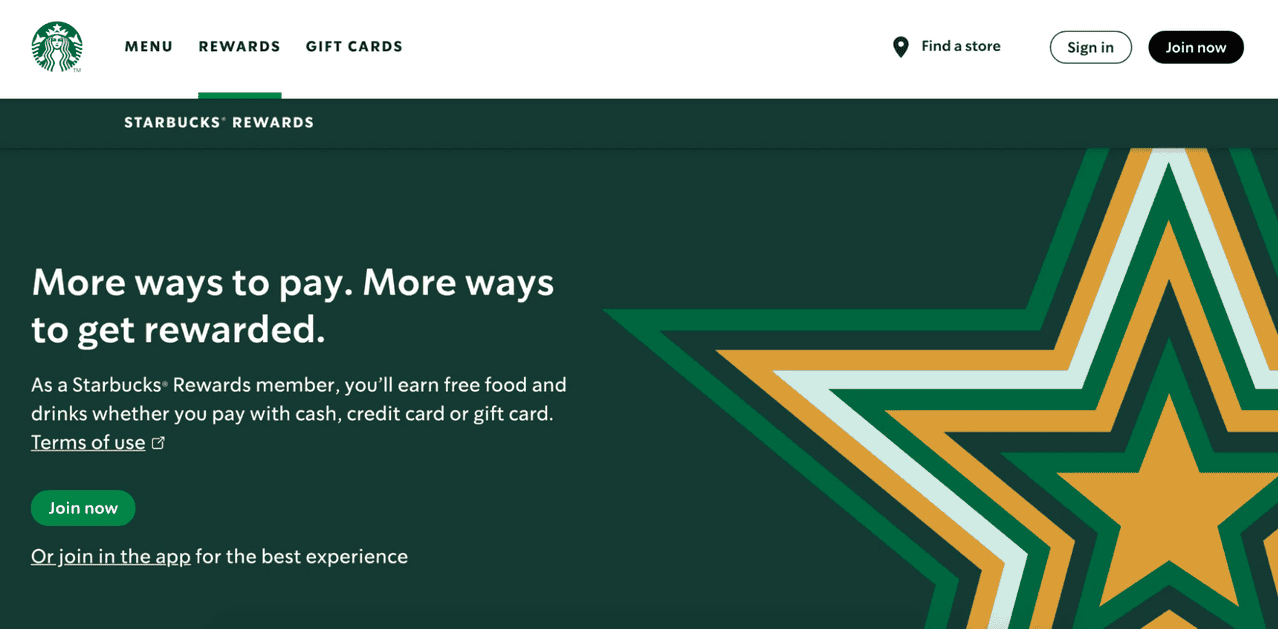
Companies like Starbucks have gone above and beyond to make their program more exciting and stand out from the competition by making it digital and by providing more unique rewards.
PROs of a points-based loyalty program:
- Free to join equals low barrier to entry for customer acquisition
- Excellent at collecting valuable zero- and first-party data
- The perfect entry point into your larger loyalty ecosystem – a great way to use engagement tactics to turn occasional customers into more frequent ones
CONs of a points-based loyalty program:
- More difficult to use for brand differentiation because rewards need to be funded
- May not provide the instant gratification that modern consumers want (i.e., need to collect points over time for rewards later)
- May not provide enough value to dramatically increase customer engagement
With points programs, customers must accumulate quite a few points for the value to be seen. While they’re great at getting people to opt-in, they’re not great at increasing engagement and spend levels. Therefore, the time to profitability can take a long time.
2. Tier-based loyalty program
Tiered programs are similar to point programs in that they usually allow customers to gain points with their purchases. The difference here is that the customer’s status will increase as they accumulate more points, and will access different rewards based on their status. Typically, the more a member spends or interacts with the brand, the higher the tier they enter.
Tiers allow retailers to distribute rewards in a way that makes sense financially. By saving your higher-value incentives for top-tier and high-value customers only, retailers can allocate their reward budget cost-effectively.
Best for:
Tiered loyalty programs are particularly well-suited for businesses that have a customer base with varying levels of engagement and purchasing behavior.
Some examples:
- Retailers: Fashion, electronics, grocery chains – tiered rewards encourage repeat purchases and higher spending.
- Airlines and hotels: Frequent flyer and frequent guest programs incentivize repeat bookings.
- Beauty and wellness companies: Cosmetics brands, spas, or fitness centers benefit from tiered progression.
- Financial institutions: Higher tiers can offer better rates, exclusive access, or premium services.
Since the higher levels provide better benefits, these programs naturally make your most valuable customers feel the most valued.
Example of tiered loyalty program:
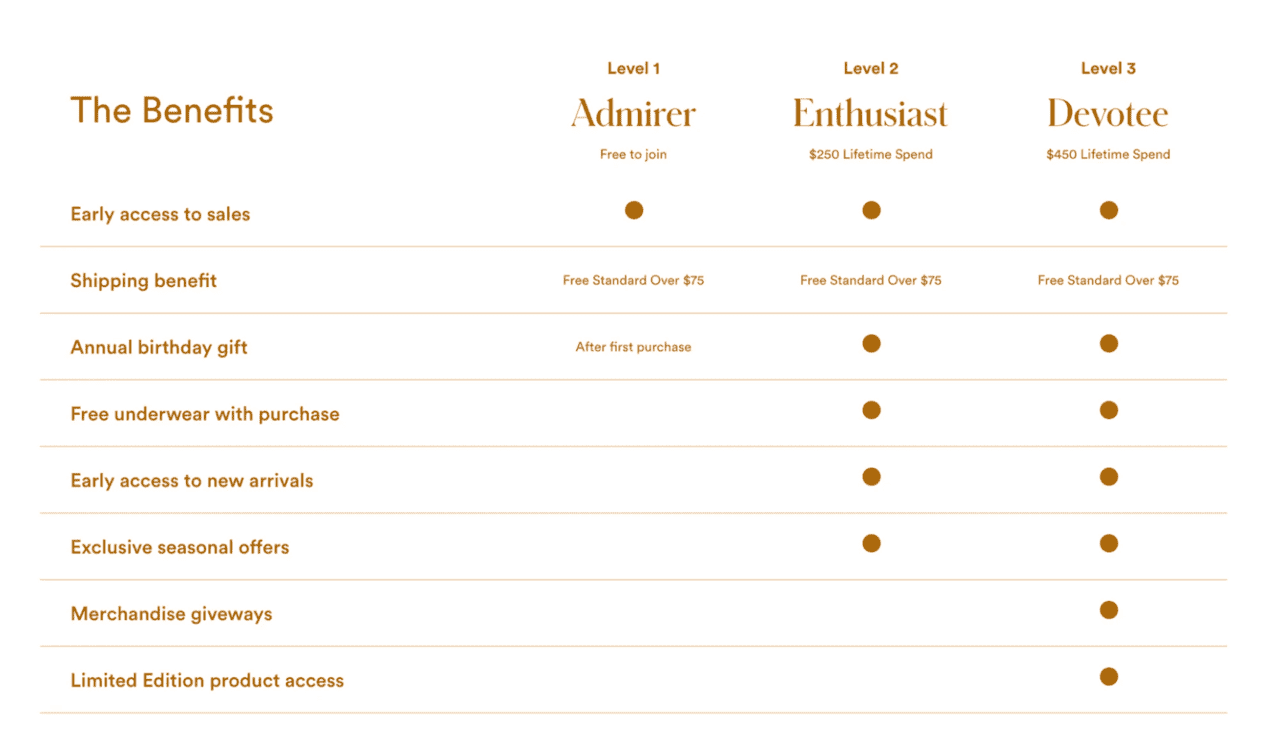
Bra and underwear brand ThirdLove uses a tiered system for its program, Hooked Rewards.
PROs of tiered programs:
- Easy to customize so your program stands out
- Adds levels of exclusivity
- Focuses on higher-value customers
- Enables gamification (progress bars, milestones, etc.)
- Encourages additional purchases as members strive for higher status
CONs of tiered programs:
- Less attractive for low-tier customers
- Downgrades can damage relationships
- More complex and requires clear communication
Avoid confusing your members (which leads to less engagement) with powerful loyalty management software.
3. Cash Back Loyalty Program
How do cash back loyalty programs work?
Members spend a certain amount to get a certain amount back, usually in coupons or “cash” that can be used exclusively at a retailer.
The catch is that there is usually a minimum spend during an earning period, which can make it difficult for infrequent shoppers to realize the value.
Best for:
Retail and e-commerce businesses with frequent purchases.
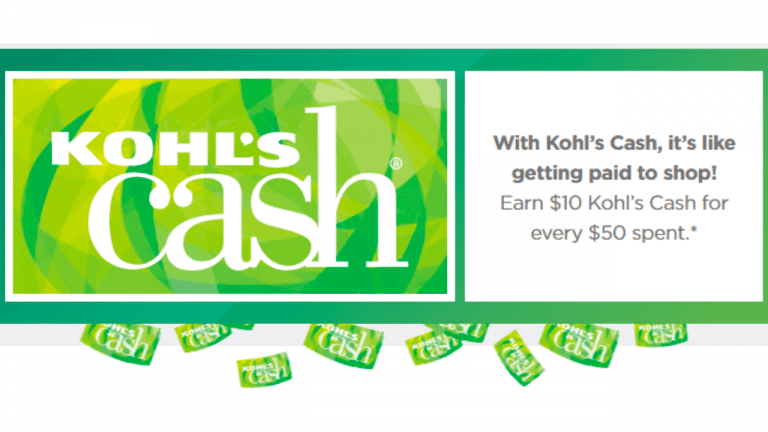
Example of cash back loyalty program:
Pros of cash back programs
- Easy to understand: “spend more, get more back”
- Redemption can drive additional sales
Cons of cash back programs
- No instant gratification
- Less compelling for infrequent shoppers
- Equal rewards for all customers regardless of profitability
- Hard to differentiate from competitors
4. Pay-to-join (premium) loyalty program
A premium loyalty program is one where members pay a recurring fee for benefits they can use right away.
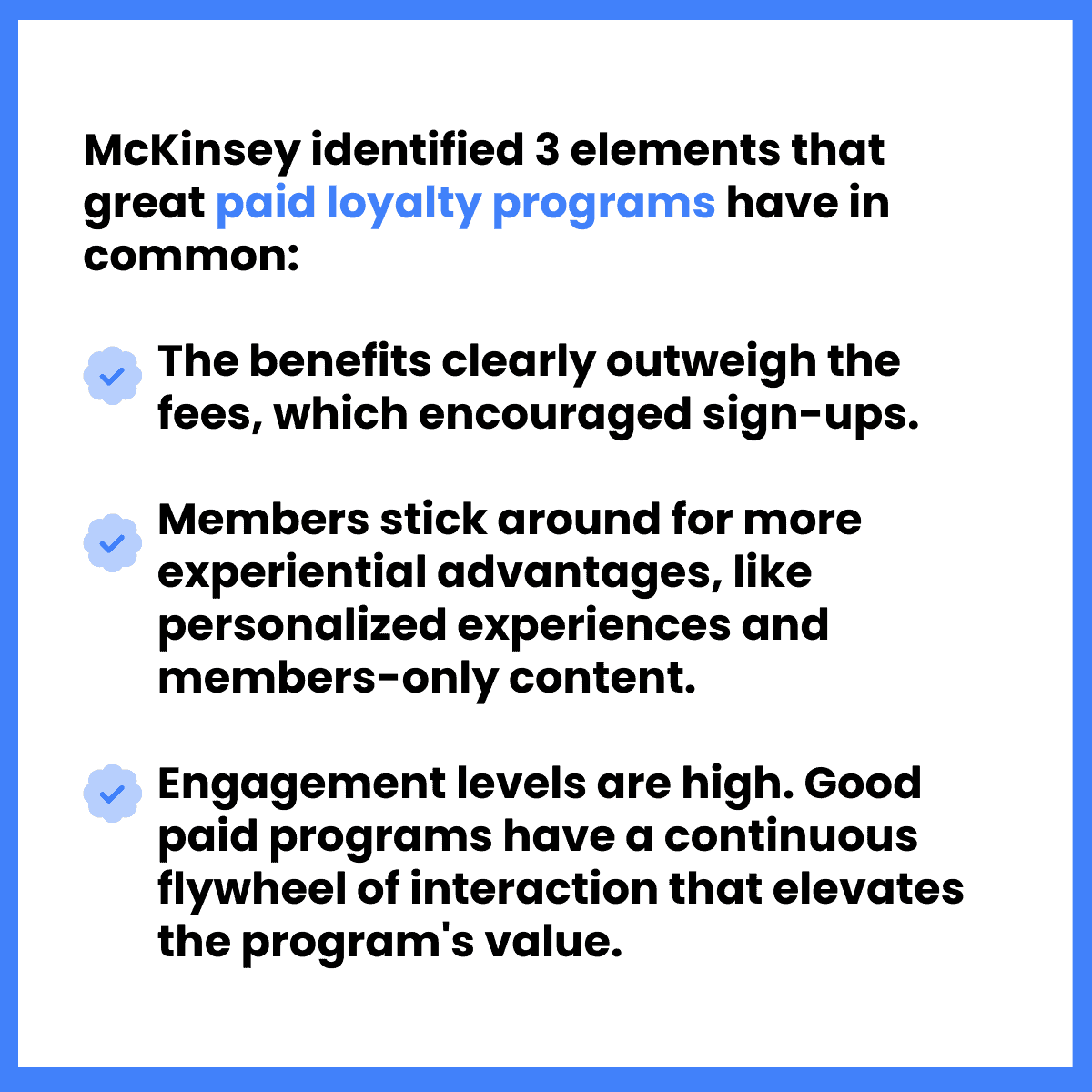
According to a McKinsey report on loyalty programs, members of premium loyalty programs are 60% more likely to spend more on your brand, compared to 30% for free programs.
Best for:
Larger retailers with the scale to offer solid perks for a price.
Pros of pay-to-join programs
- Easy to understand benefits
- Instant gratification
- Higher engagement and AOV
- Valuable data collection
- Membership fee becomes recurring revenue
Cons of pay-to-join programs
- High barrier to entry
- More technical complexity
- Requires careful design and customer support
- Security and PCI compliance considerations
When customers pay for membership, they want convenience and immediate value.
The program needs to be painless to enroll in, provide ongoing value, offer exclusive benefits and show personalization.
— Borja Sanfeliu, co-founder and CEO of Loyal Guru
5. Coalition Loyalty Programs
Coalition programs are operated by more than one business.
Best for:
Shopping malls and department stores.
Example:
Dubai Mall and Emirates Skywards. Shoppers earn miles when purchasing, which can be redeemed for travel-related perks and shopping benefits.
PROs of coalition programs
- Increase footfall and shared value
- Faster reward accumulation
- Access to expanded customer base
- Shared operational costs
- Liability managed by the coalition
CONs of coalition programs
- No brand differentiation
- Rewards may be redeemed with competitors
- Data ownership often belongs to the coalition
These programs may elevate transactions, but they don’t always build true brand loyalty.
BONUS: Values-based Loyalty Programs
This type of loyalty program doesn’t offer explicit rewards like discounts.
Instead, it emphasizes the retailer’s values and alignment with customers’ values.
Retailers may donate part of their proceeds to charities, sometimes allowing customers to choose which cause to support. These programs aim to create deeper emotional connections.
What to read next?
Loyalty platform providers – technology advice for enterprise retailers >>
CONCLUSION
Whether you’re looking to increase sales or protect margins, it all begins with knowing your customers and personalizing the shopping experience.
Loyalty programs help retailers stay competitive, add value to shoppers, and shape customer behavior while nurturing long-term loyalty.
If you’re a retailer and are interested in discussing the opportunities available through a loyalty management platform or loyalty app, get in touch with our team – we’ll be happy to talk through your company’s unique challenges.